
Senior wins award from SETI Institute for planetary research
Ze-Wen Koh plans to pursue a doctorate in planetary science after graduation.
 Department Homepage
The College of Arts & Sciences
Department Homepage
The College of Arts & Sciences
Ze-Wen Koh plans to pursue a doctorate in planetary science after graduation.
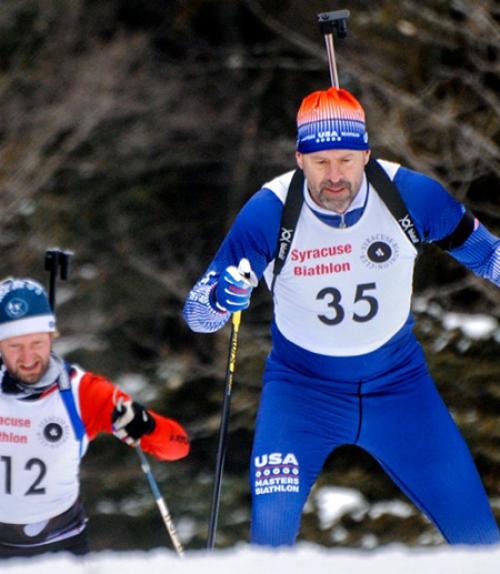
Craig Wiggers grew up in Alabama. During his 25-year career in the U.S. Marines he served in Iraq and Afghanistan. So when he moved to Ithaca as a Cornell ROTC instructor in 2012, he wasn’t quite sure what to do with snow. “At first my wife and I spent our winters staring at the walls and waiting for spring,” said Wiggers, now director of administration at the Department of Physics in the College of Arts and Sciences (A&S).
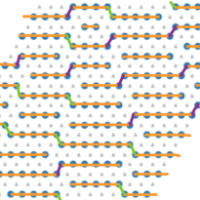
Eun-Ah Kim and Michael Matty, M.S. ’19, Ph.D. ’22, describe a phase in between the liquid and the solid for electron structures.

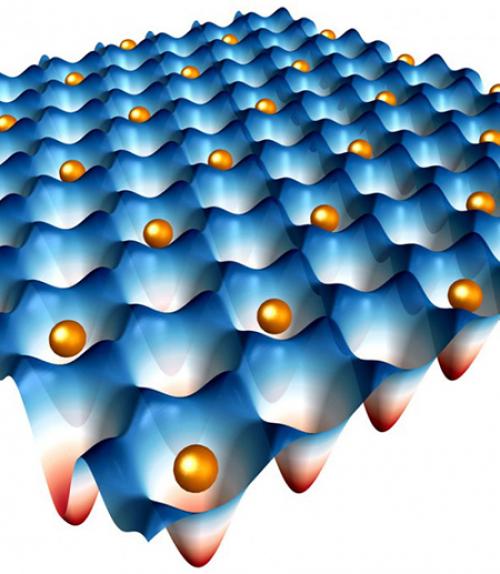
Even though a crystal of electrons was first predicted in 1934, a method for achieving it had remained elusive.
A new explanation of nanoscale mechanics by Michelle Wang's lab contributes to the future of CRISPR technology.
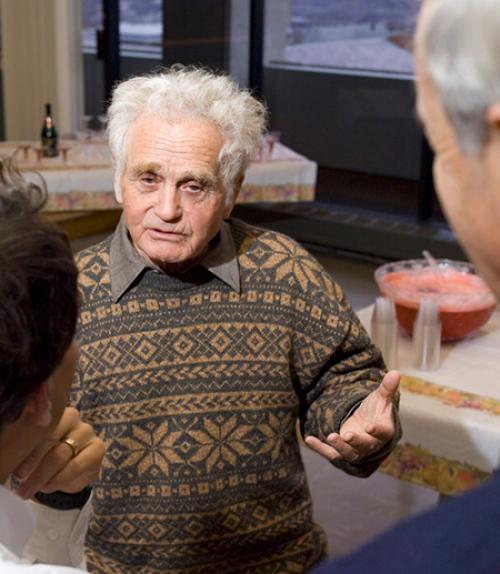
Some of the world’s most prominent human-rights leaders honored the late Yuri Orlov, professor emeritus of physics in the College of Arts and Sciences, in a webinar Nov. 18 at 10 a.m.
The finding provides evidence for an organizational principle in which each muscle has a specific function in flight control.
With $410,000 Ivan Bazarov will research long lifetime spin-polarized electron sources in particle accelerators.
Dan Ralph, Ph.D. ’93, the F.R. Newman Professor of Physics, is among the center’s 25 principal investigators.
Thanks to additional significant support from Seth Klarman ’79 and Beth Schultz Klarman, the Klarman Postdoctoral Fellowship program has been expanded to support 10 fellows per cohort.
New research into a common chemotherapy agent is advancing the study of cancer inhibitors.
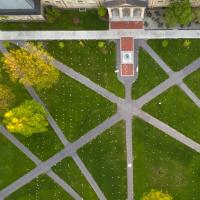
The fourth cohort of Klarman Fellows is the largest since the program’s launch in 2019.
For most undergraduate women studying physics, they’ll likely experience being one of just a few women—if not the only one—in the classroom. Faculty and student leaders from the physics departments at Ithaca College and Cornell University recently joined forces to host the 2023 American Physical Society (APS) Conference for Undergraduate Women in Physics (CUWiP), designed to inspire and empower the next generation of female physicists.
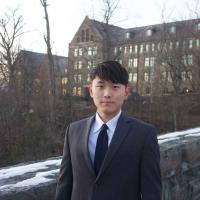
“This program focuses on the social good that can come from interactions between science and policy."
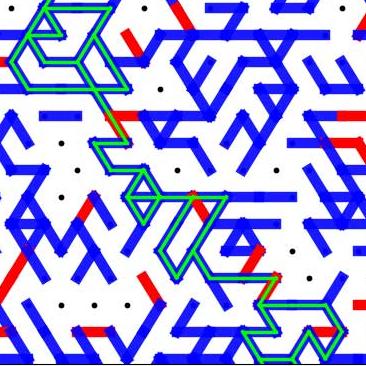
In the experimental metal-to-insulator transition, even a tiny amount of imperfection plays a key role in revealing the universal physics.
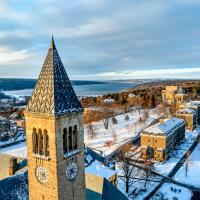
Assistant professors Debanjan Chowdhury, physics, and Andrew Musser, chemistry, are among 126 researchers in the United States and Canada who this year have received two-year fellowships to advance their work.
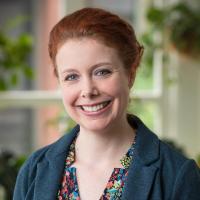
In 1995, astronomers found the first known planet around a sun-like star outside our solar system. The news caused a buzz of excitement around the world. Finally we had proof of a planet orbiting another star like our own—the stepping stone, perhaps, to finding extraterrestrial life in far-distant solar systems.
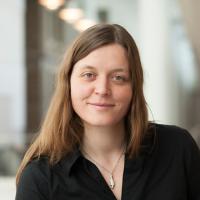
Twelve Cornell and Weill Cornell Medicine faculty members – six of whom are also Cornell alumni – have been elected fellows of the American Association for the Advancement of Science (AAAS), the world’s largest general scientific society.
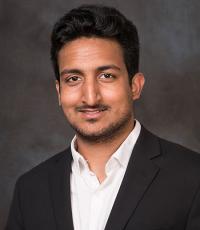
Vijay Varma is among six inaugural cohort members in the Klarman Postdoctoral Fellowship program.
Christopher Morrison Pierce, a doctoral candidate in the field of physics, has been selected by the U.S. Department of Energy (DOE) for the Office of Science Graduate Student Research (SCGSR) Program.
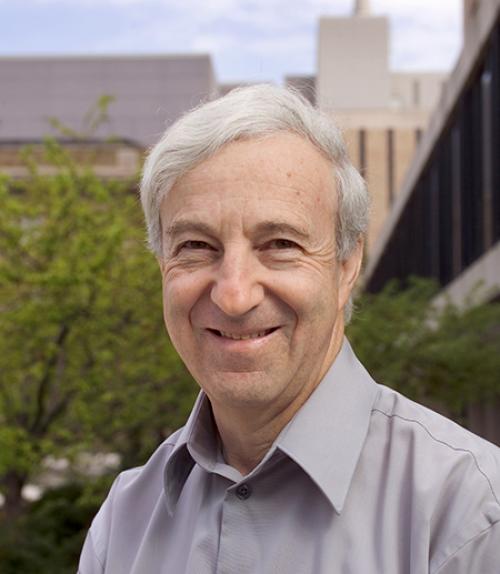
Saul Teukolsky, the Hans A. Bethe Professor of Physics in the College of Arts and Sciences, has won the American Physical Society’s 2021 Einstein Prize, which recognizes outstanding achievement in gravitational physics.