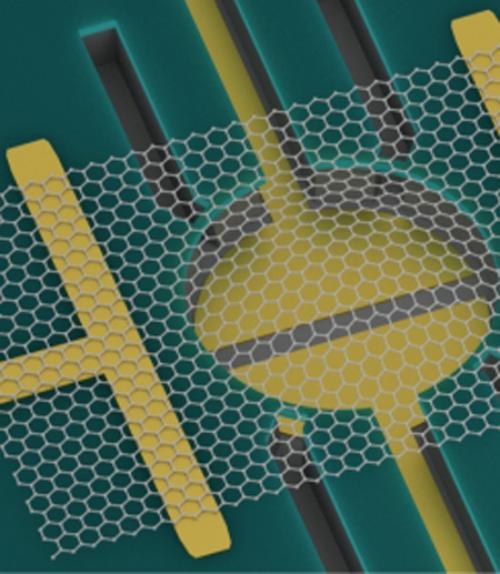
Graphene used as a frequency mixer in Cornell-led research
A professor, a postdoctoral researcher and a graduate student hop onto a trampoline.
 Department Homepage
The College of Arts & Sciences
Department Homepage
The College of Arts & Sciences
A professor, a postdoctoral researcher and a graduate student hop onto a trampoline.
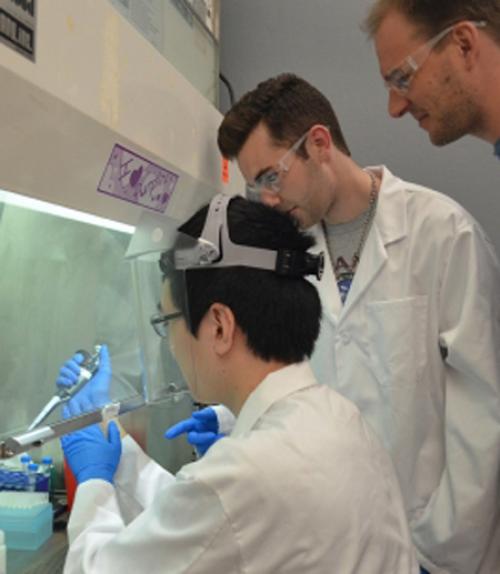
When cells die, whether through apoptosis or necrosis, the DNA and other molecules found in those cells don’t just disappear. They wind up in the blood stream, where degraded bits and pieces can be extracted.
Researchers in the collaboration between the Colleges of Arts & Sciences and Engineering will work on technologies and new tools to reveal the inner workings of the brain.

All materials found in nature – even the most “perfect” diamond – contain defects, since the atoms inside them are never arranged in perfect order.Such structural disorder causes complex force distributions throughout the material. Measuring these forces is critical to understanding the material’s behavior, but these force measurements have been impossible to perform through conventional techniques, which only determine average responses to stress.
Twelve Cornell assistant professors, including three from the College of Arts & Sciences, have been awarded research grants by the Affinito-Stewart Grants Program.The program, administered by the President’s Council of Cornell Women (PCCW), aims to increase the long-term retention of women on the Cornell faculty by supporting the completion of research important in the tenure process.
Despite the distance, Cornell researchers are actively involved in the cutting-edge particle physics experiments taking place at CERN, the European Organization for Nuclear Research laboratory in Geneva, Switzerland.This Cornell Research story explores the many projects and discoveries Cornell faculty are undertaking as they pursue answers to some of the universe's greatest mysteries.
This Cornell Research story explores the many avenues that graduate students pursue in their research projects and the multitide of Cornell supports available to them.More than 5,000 graduate students work at Cornell, studying in more than 80 fields.
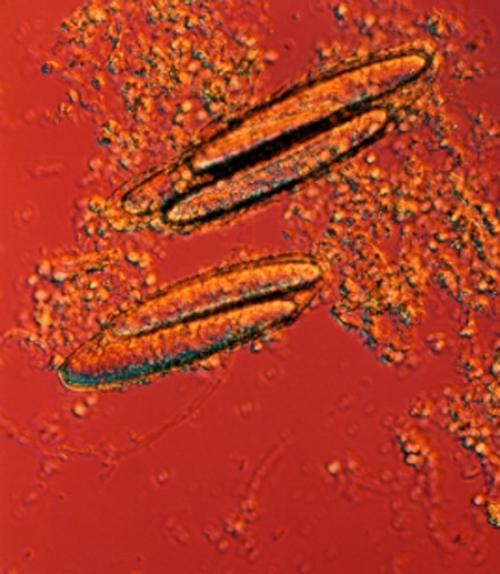
Research areas cover beneficial and pathogenic interactions between hosts (plants and animals) and microbes (bacteria, viruses and fungi).
Kyle Shen, associate professor of physics, creates and investigates artificial and unconventional materials with unusual electronic and magnetic properties. His research into these new materials and their potential applications is explored in this Cornell Resarch story.

Like all researchers, Itai Cohen, Physics, has a lot of questions. But unlike many, his questions make big, topical leaps. From fruit flies to mosh pits, from origami to cartilage—Cohen dreams of preventing stampedes in Mecca, understanding the complex neuromechanics of fruit fly flight, and making self-folding robots from a single sheet of atoms. How can all this happen in one lab? Well, the answer is: it doesn’t.
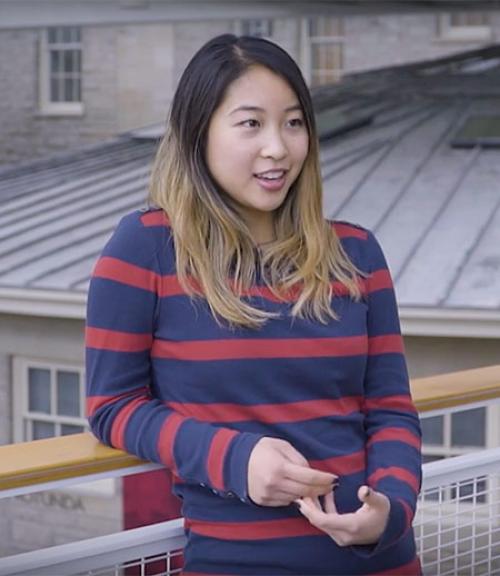
Six new projects will be launched in music, classics, economics, mathematics, physics and sociology.

Robert D. Guber ’15 studied alcoholic liver, diabetes, and obesity. Lipi Gupta ’15 worked on reducing beam emittance in the Cornell Electron Storage Ring (CESR), a 768-meter ring that is part of the Cornell High Energy Synchrotron Source (CHESS), to produce brighter s-rays. Sang Min Han ’15 examined toadfish to create a mathematical model for vertebrate vocalization. Swati Sureka ’15 engineered nucleic acid to develop DNA materials. Teresa O.
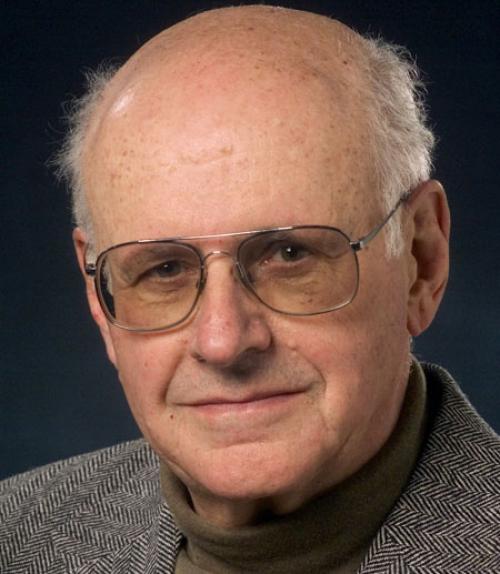
Kurt Gottfried, emeritus professor of physics and a recognized expert on nuclear arms control, has been awarded the 2016 Scientific Freedom and Responsibility Award from the American Association for the Advancement of Science (AAAS).
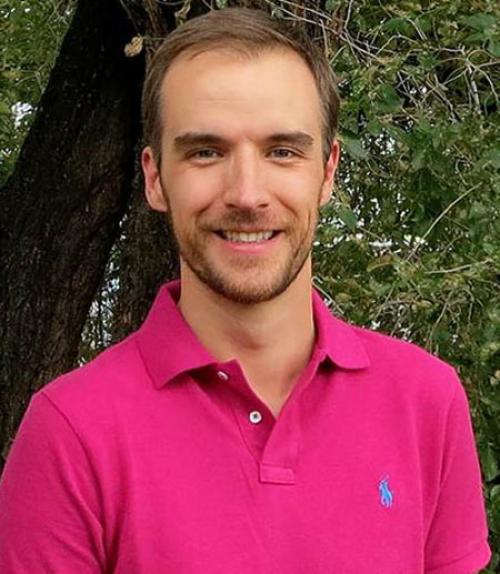
Brad Ramshaw, assistant professor of physics, has been awarded the Lee Osheroff Richardson (LOR) Science Prize for 2017.
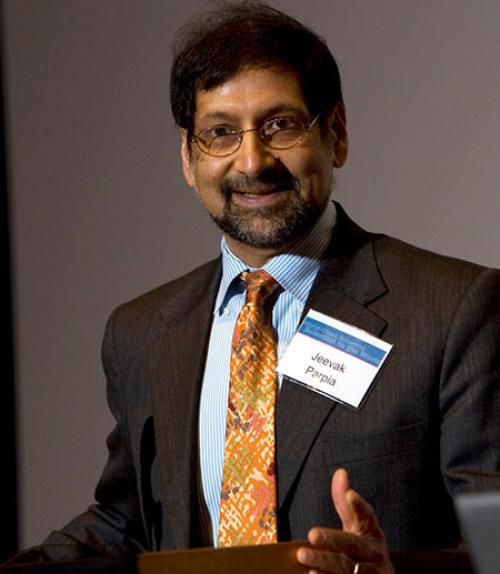
Professor of physics Jeevak Parpia, M.S. ’77, Ph.D. ’79, is one of three winners of the 2017 Fritz London Memorial Prize, which recognizes scientists who have made outstanding contributions to the field of low-temperature physics.
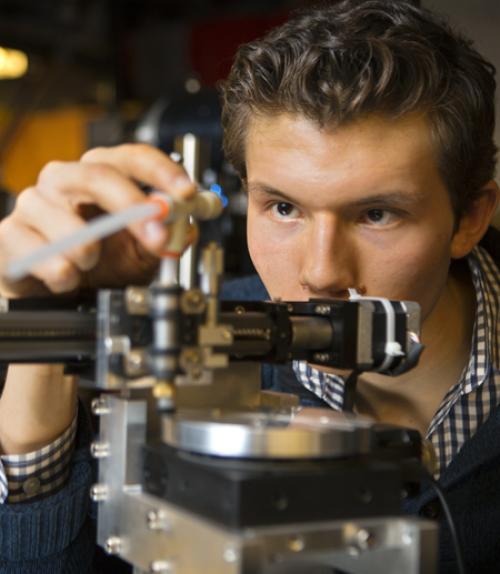
Exposing undergraduates to research across the spectrum of fields has long been a hallmark of the university.
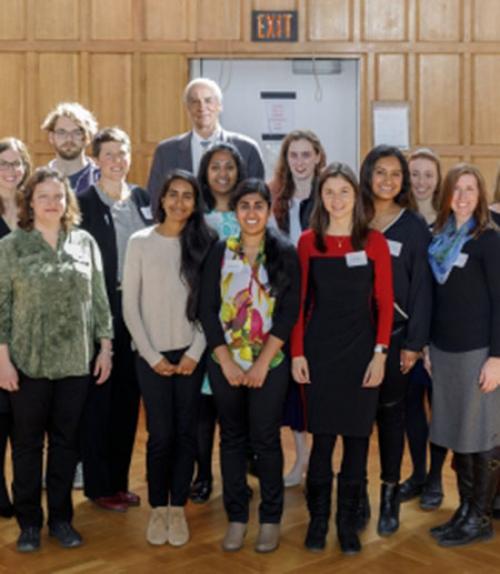
Several individuals and organizations received Constance E. Cook and Alice H. Cook Awards March 9. Cook Awards honor Cornell students, faculty and staff members for their commitment to women’s issues and for improving the climate for women at Cornell. The Cook Award Committee and the University Diversity Council select winners from nominations made by members of the Cornell community.
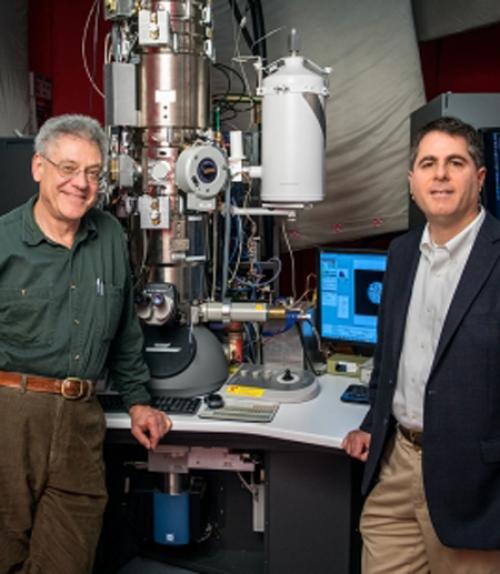
The electron microscope, a powerful tool for science, just became even more powerful, with an improvement developed by Cornell physicists. Their electron microscope pixel array detector (EMPAD) yields not just an image, but a wealth of information about the electrons that create the image and, from that, more about the structure of the sample.

Cornell scientists will lead a team building a telescope that will offer insights into the Big Bang and the ways that stars and galaxies form.
The experimental realization of ultrathin graphene – which earned two scientists from the University of Manchester, U.K., the Nobel Prize in physics in 2010 – has ushered in a new age in materials research.
In this spring’s Hans Bethe Lecture at Cornell, physicist Joshua Frieman will introduce the Dark Universe, give an overview of what we have learned about it, and describe new experiments and observatories that aim to illuminate its enigmas.
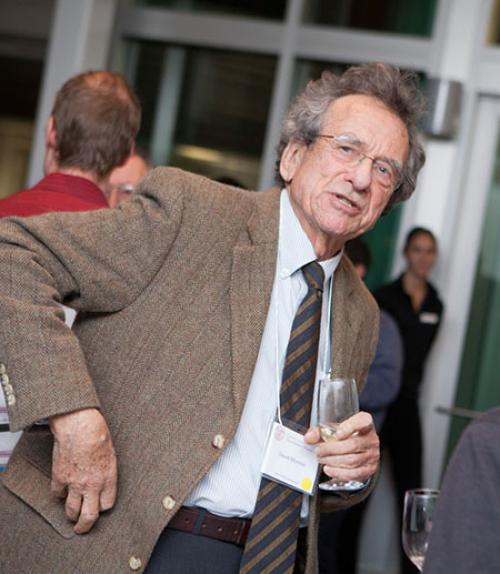
David Mermin, the Horace White professor of physics emeritus, has been named the recipient of this year’s Dagmar and Václav Havel Foundation VIZE 97 Prize.
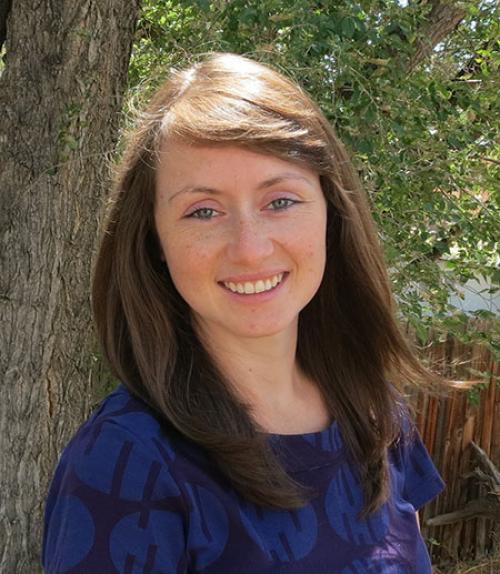
This Cornell Research story profiles the work of Natasha Holmes, assistant professor of physics, who studies the teaching and learning of physics, particularly in lab courses.

Hear from Arts & Sciences faculty on topics ranging from neuroscience to detective fiction to music composition to global financial policy.
On June 16-17, the Cornell Center for Materials Research (CCMR) held a symposium in the Physical Sciences Building to explore using origami to create machines at the micron scale using atomically thin materials.