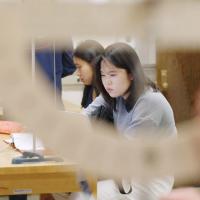
Putting The ‘Science’ Back Into Science Labs
This Forbes news article focuses on the work of Natasha Holmes, Ann S. Bowers Assistant Professor of Physics, and her efforts to innovate student learning.
 Department Homepage
The College of Arts & Sciences
Department Homepage
The College of Arts & Sciences
This Forbes news article focuses on the work of Natasha Holmes, Ann S. Bowers Assistant Professor of Physics, and her efforts to innovate student learning.
To make miniature machines that essentially build themselves, researchers took inspiration from DNA origami.
Five Cornell faculty members have been elected fellows of the American Association for the Advancement of Science (AAAS), the world’s largest general scientific society.
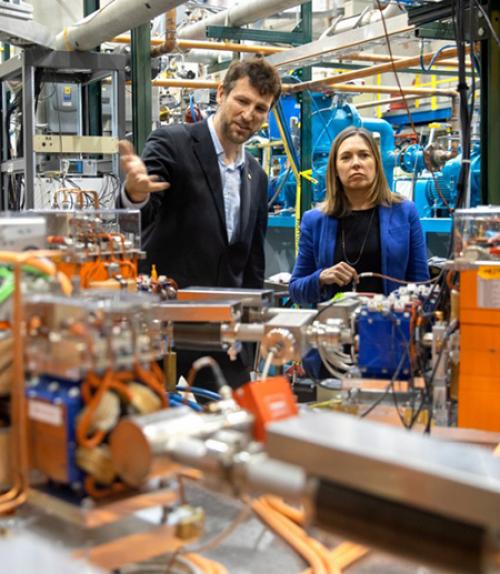
Construction is complete and the first major test was a success, so a celebration was in order to mark these accomplishments of the Cornell-Brookhaven ERL Test Accelerator facility, known as CBETA. In time, it is expected to become the most energy-efficient, high-performance accelerator ever built.

The American Institute of Physics (AIP) has awarded the 2020 Karl Taylor Compton Medal for Leadership in Physics to Paul Ginsparg, professor of physics and information science and founder of arXiv. The medal and $10,000 prize is presented by AIP every four years to “highly distinguished physicists who have made outstanding contributions through exceptional statesmanship in physics.”
Eun-Ah Kim, professor of physics, has received a $1.2 million grant from the National Science Foundation to create new data science approaches to meet the data-driven challenges of strongly correlated quantum matter (SCQM), Cornell Research reports. This project, undertaken with Kilian Q.
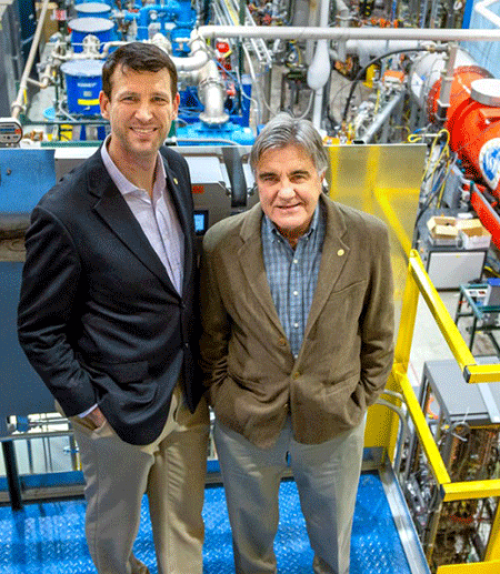
The technology's capabilities can power the world’s largest accelerators to help scientists unlock the mysteries of the universe.
Six of the world’s most promising early-career scholars will pursue leading-edge research projects across the sciences, social sciences and humanities during three-year terms.

Thomas Hartman, assistant professor of physics, studies high-energy theoretical physics. His goal, he explains in this article in Cornell Research, is to bring to light the fundamental properties of nature, which derive from the subatomic world of quantum physics.
New Cornell research shows that traditional physics labs, which strive to reinforce the concepts students learn in lecture courses, can actually have a negative impact on students. At the same time, nontraditional, inquiry-based labs that encourage experimentation can improve student performance and engagement without lowering exam scores.
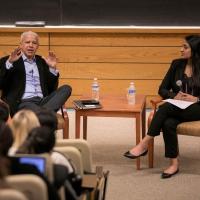
Marc Lacey '87 offered advice to students, visited classes and learned about faculty research.
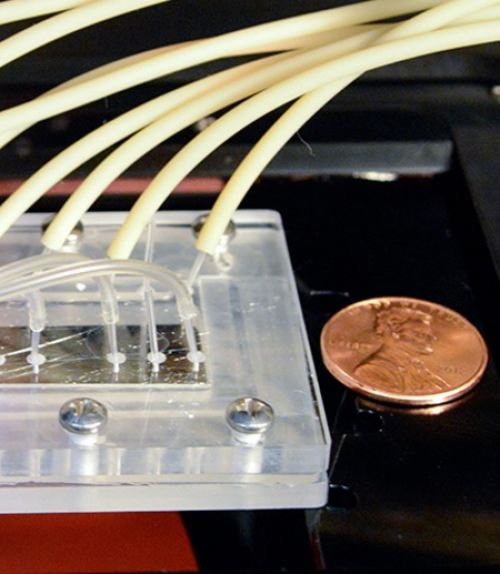
The team of economists and physicists took a novel approach to analyzing the behavior of breast tumor cells.

This lecture has been cancelled.Leftover radiation from the Big Bang – the cosmic microwave background (CMB) – carries clues about the fundamental nature of the universe, which was only 400,000 years old when the CMB was released.
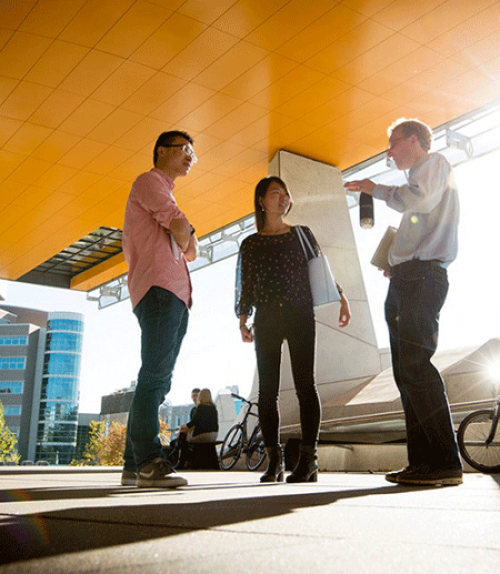
More than three years into the provost’s Radical Collaboration initiative, about 15 faculty members have been hired across fields and colleges, partnerships continue to spark research and bold approaches into new areas, and each of the strategic task forces feeding the program has crafted its own approach to the effort.
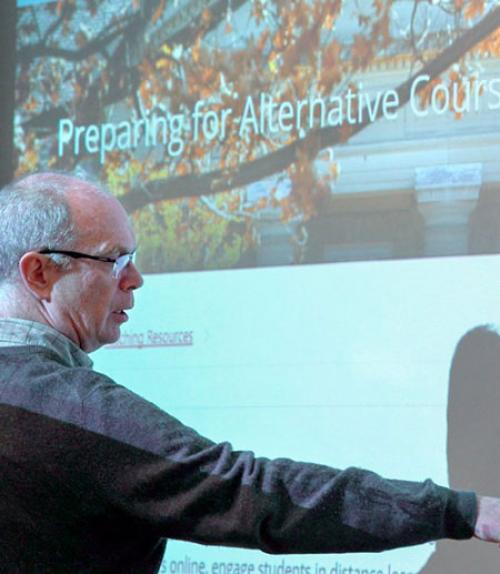
Cornell's Center for Teaching Innovation is helping faculty prepare for the shift to virtual learning April 6.
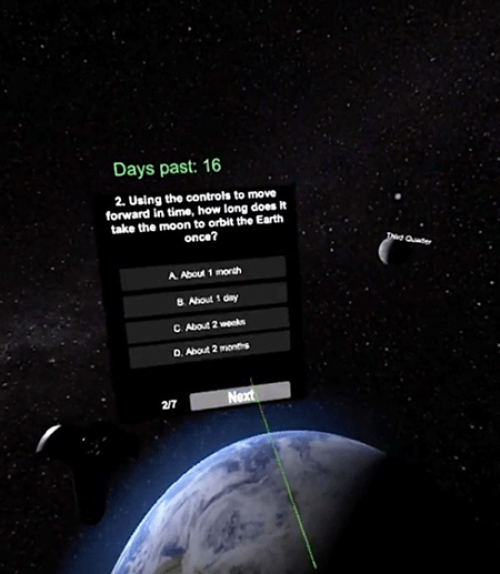
The study has new implications as learning around the world shifts online to combat the spread of coronavirus.
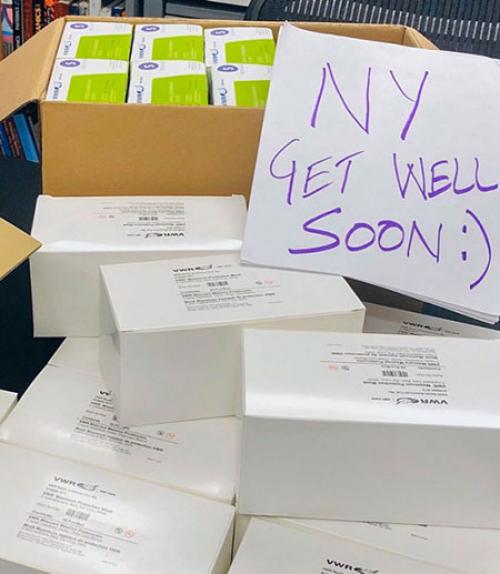
“We’re so happy to do our small part to support the essential and heroic work being done by the health care professionals."
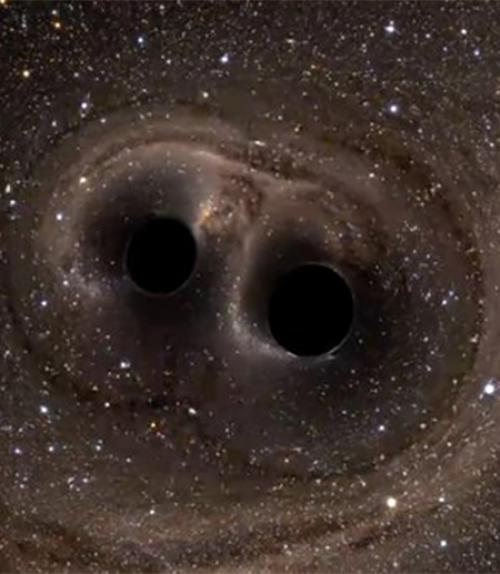
Shoot a rifle, and the recoil might knock you backward. Merge two black holes in a binary system, and the loss of momentum gives a similar recoil -- a “kick” -- to the merged black hole.
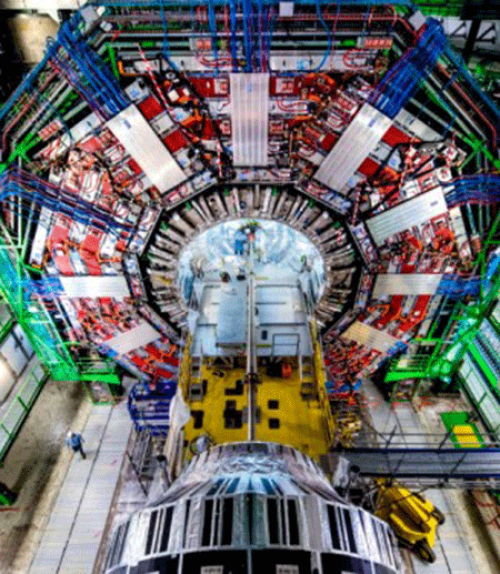
Cornell is leading a $77 million effort, beginning April 1, to upgrade the Compact Muon Solenoid (CMS) experiment at the Large Hadron Collider (LHC) at the European Organization for Nuclear Research (CERN).
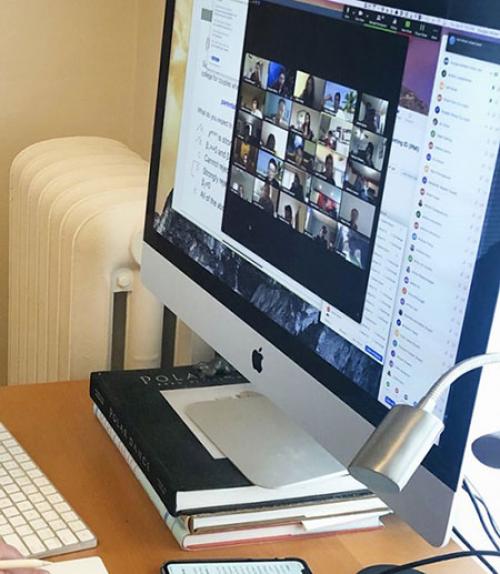
On April 6, Cornell instructors led 6,600 Zoom meetings with a total of 89,000 participants.
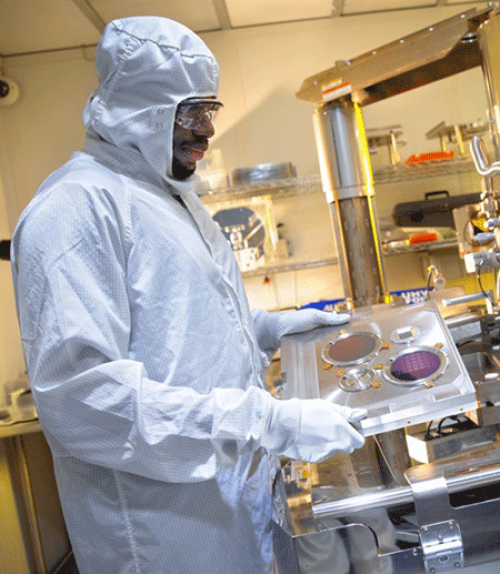
Electroplating – the process of using electricity to deposit one metal onto another – originated in the 19th century and can be found in everything from pennies to gold-topped cathedrals.
Jane Wang, professor of physics, has been awarded a fellowship from the Simons Foundation for 2020.The fellowships are given to outstanding mathematicians and theoretical physicists to extend academic leaves from one term to a full year, enabling recipients to focus solely on research for the long periods often necessary for significant advances.
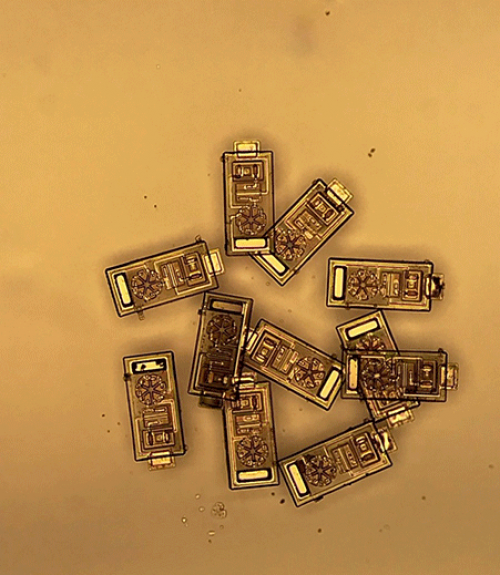
Theologians once pondered how many angels could dance on the head of a pin. Not to be outdone, Cornell researchers who build nanoscale electronics have developed microsensors so tiny, they can fit 30,000 on one side of a penny.
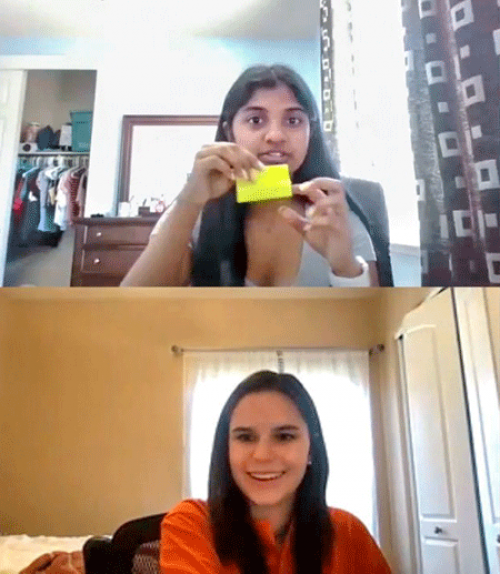
Teaching labs remotely “gave us this opportunity to really pause and think about what are our goals for the students.”