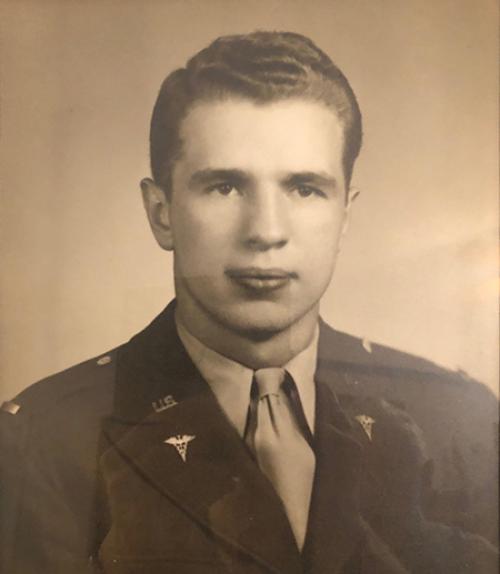
Centenarian alum remembers days as WWII medic
Cedric Jimerson '40, M.D. '43, was honored with other veterans from his home state of Pennsylvania at a ceremony in Harrisburg, Pa. commemorating the 75th anniversary of D-Day.
 Department Homepage
The College of Arts & Sciences
Department Homepage
The College of Arts & Sciences
Cedric Jimerson '40, M.D. '43, was honored with other veterans from his home state of Pennsylvania at a ceremony in Harrisburg, Pa. commemorating the 75th anniversary of D-Day.
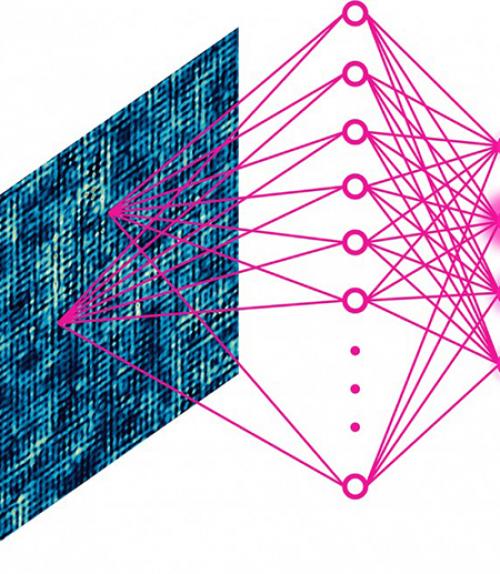
A Cornell-led team has developed a way to use machine learning to analyze the data generated by scanning tunneling microscopy.
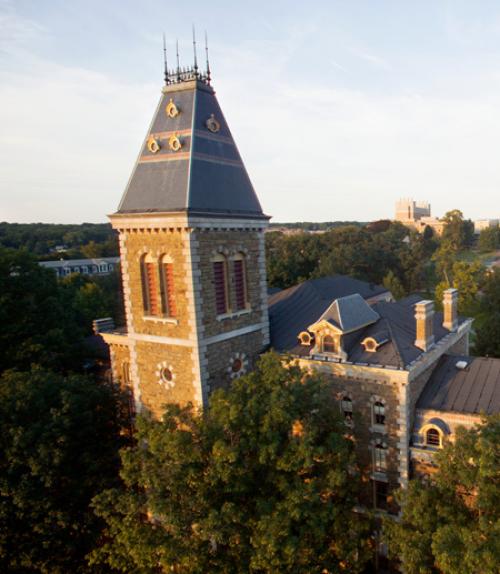
Two A&S professors — Jenny Mann, associate professor of English, and Jolene Rickard, associate professor of American studies and history of art and visual studies — were honored recently by the Graduate and Professional Student Assembly (GPSA) with Faculty Teaching, Advising and Mentorship awards. Michael Niemack, assistant professor of physics, received an honorable mention. Faculty members are nominated by current graduate students or alumni.
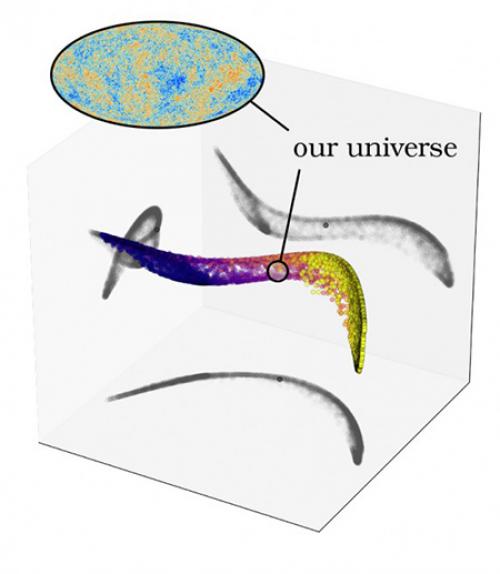
“Science works because things behave much more simply than they have any right to.”
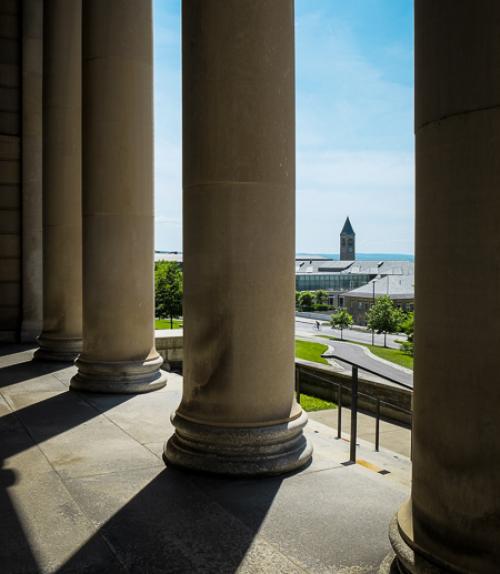
The White House has recognized four Cornell faculty members – Thomas Hartman, Jenny Kao-Kniffin, Kin Fai Mak and Rebecca Slayton – with prestigious 2019 Presidential Early Career Awards for Scientists and Engineers (PECASE). The awards were announced July 2.The award is the highest honor bestowed by the federal government to scientific and engineering professionals who are in first stages of their independent research careers and who show exceptional promise for leadership.
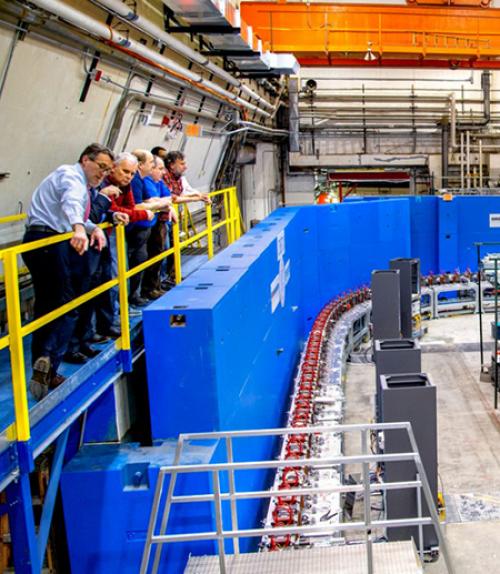
A half-century after the idea of energy-recovering accelerators was proposed at Cornell, the university is showing that high-energy physics can also be renewable-energy physics.
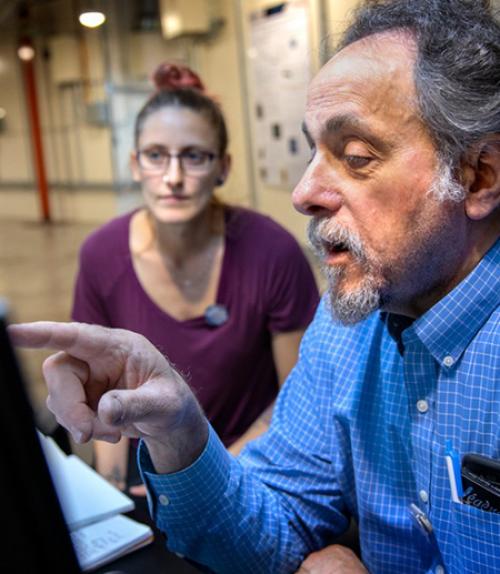
The Cornell High Energy Synchrotron Source, more commonly known as CHESS, entered a new era April 1.
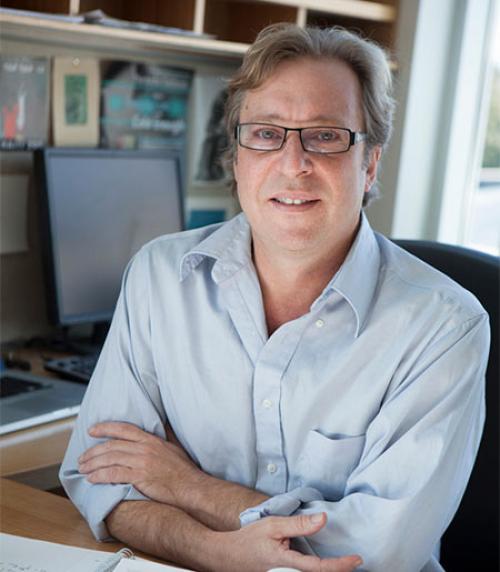
The Riemann hypothesis -- an unsolved problem in pure mathematics – is one of the seven Millennium Prize Problems, with a $1 million prize to the person who solves it. But that’s not why it fascinates mathematical physicist Andre’ LeClair, for whom this is perhaps the most important open question in mathematics.
Two College of Arts & Sciences faculty members were awarded grants by the U.S. Department of Energy as part of its Office of Science Early Career Research Program. Jared Maxson, Ph.D. ’15 and Brad Ramshaw, both assistant professors of physics, will receive at least $750,000 over five years to support their scientific endeavors.
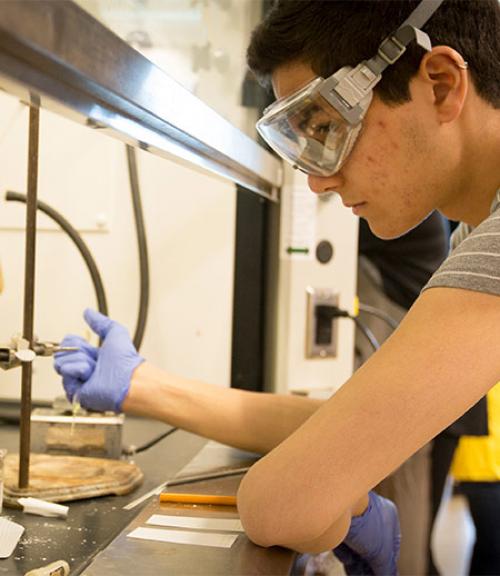
NSF funds two discipline-based education research projectsThe National Science Foundation has funded two discipline-based education research (DBER) projects in the College of Arts & Sciences, contributing to Cornell’s growing DBER profile. Both grants are about $300,000 and three years in length.
“We are recruiting the most promising emerging researchers from around the world."
The Office of Engagement Initiatives has awarded $1,307,580 in Engaged Curriculum Grants to 25 teams of faculty and community partners that are integrating community-engaged learning into majors and minors across the university.This year’s awards involve 99 Cornell faculty and staff from 46 departments. The 39 community partners are from 10 countries; 11 projects are based in New York state.
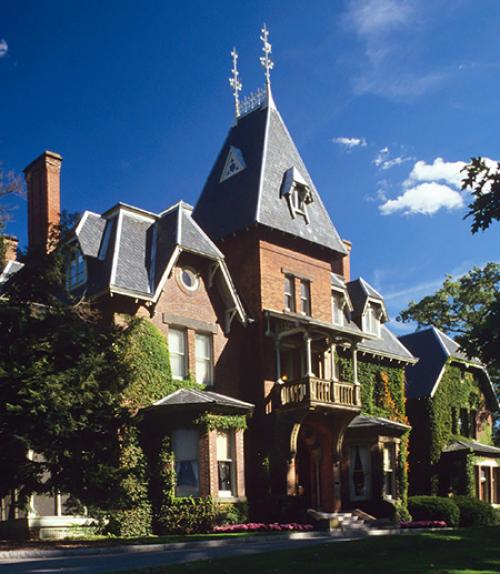
A Nobel Prize-winning physicist, two bestselling authors and a leader in global sustainable agriculture are among six newly elected Andrew Dickson White Professors-at-Large at Cornell.Their six-year terms are effective July 1, 2019 through June 30, 2025. Candidates are nominated by Cornell faculty members; appointments are considered following review and recommendation by a faculty selection committee.
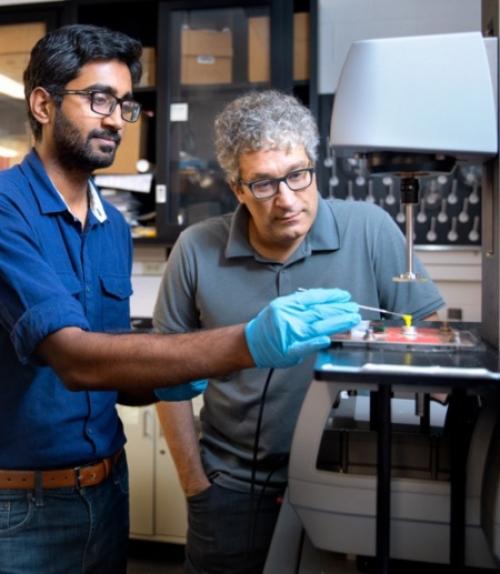
You won’t be able to hear it, or even see it yet, but Cornell researchers are using ultrasonic waves to turn solids to slush – and back again.
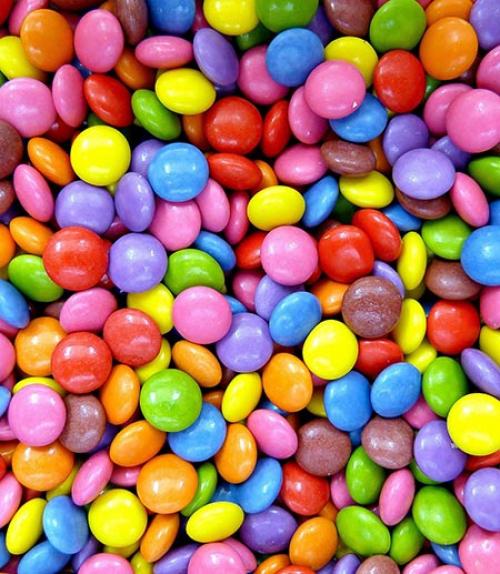
Paul Chaikin, professor of physics at New York University, will give a talk, “How Many M&M’s in That Jar? Particle Packings, Frustration and Why Things Crystallize,” Oct. 2 at 7:30 p.m. in Schwartz Auditorium, Rockefeller Hall.
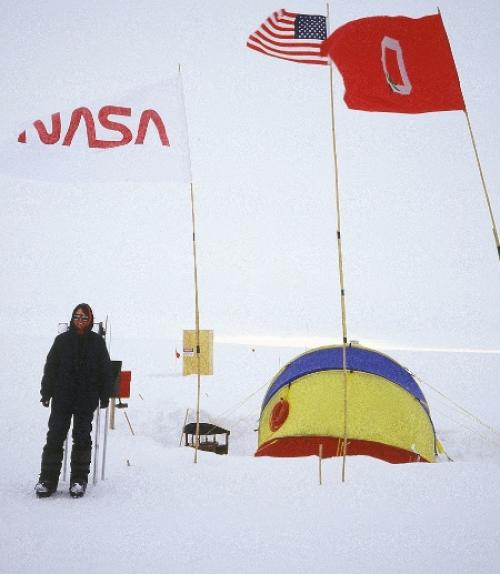
Ingrid Zabel '87 has created The Teacher-Friendly Guide to Climate Change.
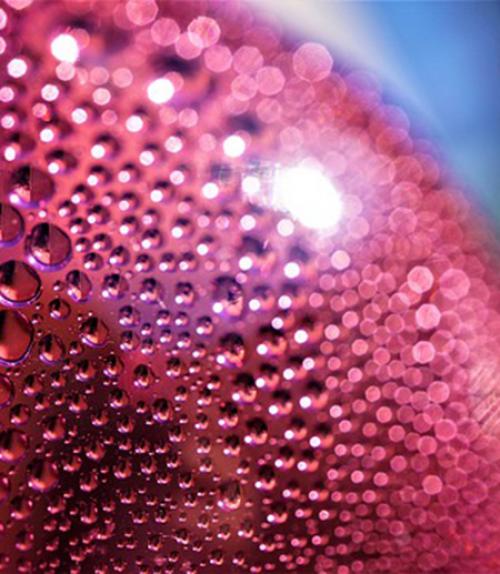
New Cornell-led research is pointing the way toward an elusive goal of physicists – high-temperature superfluidity – by exploring excitons in atomically thin semiconductors.
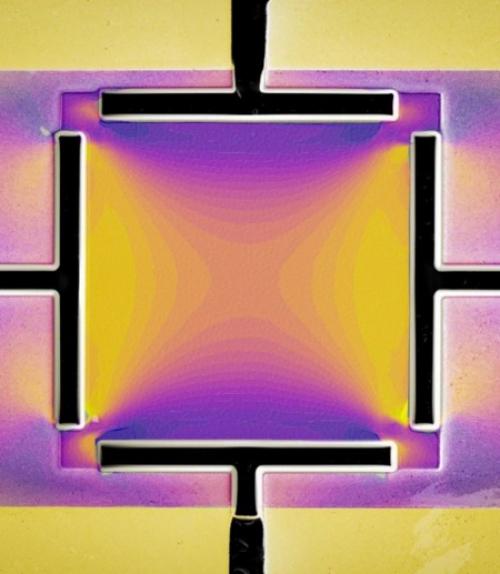
“Sometimes stressing can produce amazing results,” said physics professor Katja Nowack.
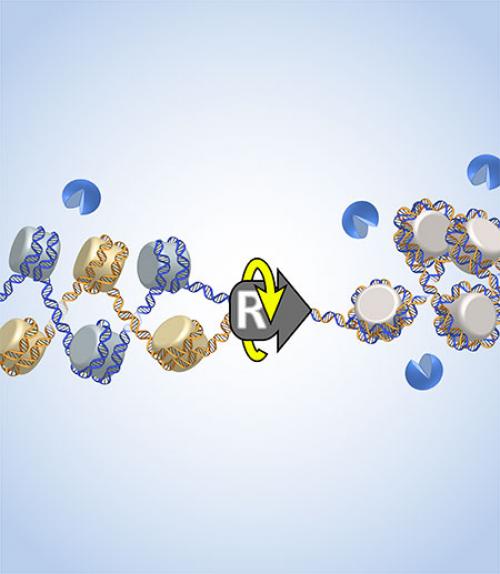
“This research highlights the importance of physical principles in fundamental biological processes.”
Cornell has recognized eight members of the faculty for excellence in teaching undergraduate students and contributions to undergraduate education at the university.The Stephen H. Weiss Awards were announced Oct. 18 by President Martha E. Pollack in a report to the Cornell University Board of Trustees. The eight awardees were unanimously recommended by a selection committee composed of six faculty members and two students, who considered 37 distinguished nominees in all.
Cornell researchers have put a new spin on measuring and controlling spins in nickel oxide, with an eye toward improving electronic devices’ speed and memory capacity.
On October 3-4, 2019, Cornell CIS (Computing and Information Science) celebrated its 20th anniversary. To mark the event, CIS hosted a symposium showcasing the game-changing impact of computing on a breadth of disciplines.
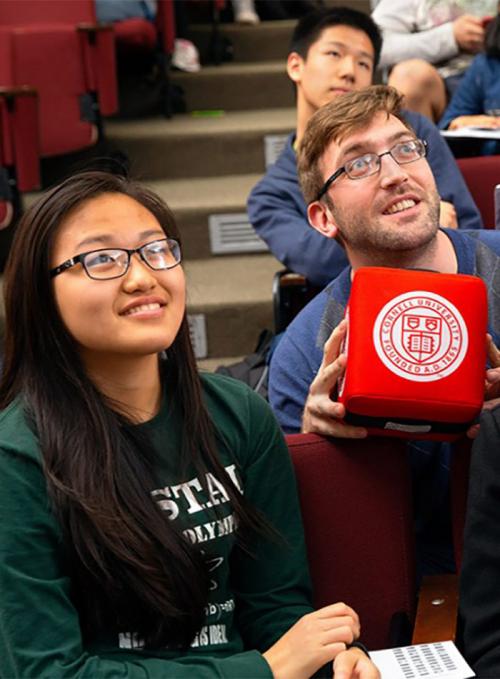
Teaching at Cornell is in the midst of a transformation, with faculty applying the latest research and technologies across disciplines to excite and engage students.

There’s a structural avalanche waiting inside that box of Rice Krispies on the supermarket shelf. Cornell researchers are now closer to understanding how those structures behave – and in some cases, behave unusually.
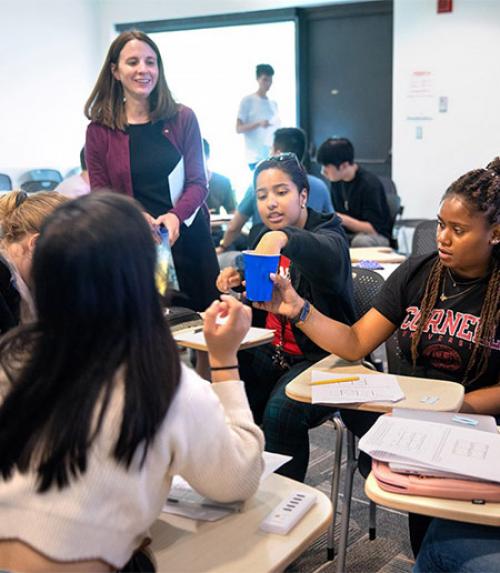
“Closing Achievement Gaps,” a new episode of the “What Makes Us Human?” podcast series, examines how active learning helps students succeed. The podcast’s fifth season – “What Do We Know about Inequality?” – showcases the newest thinking across academic disciplines about inequality.