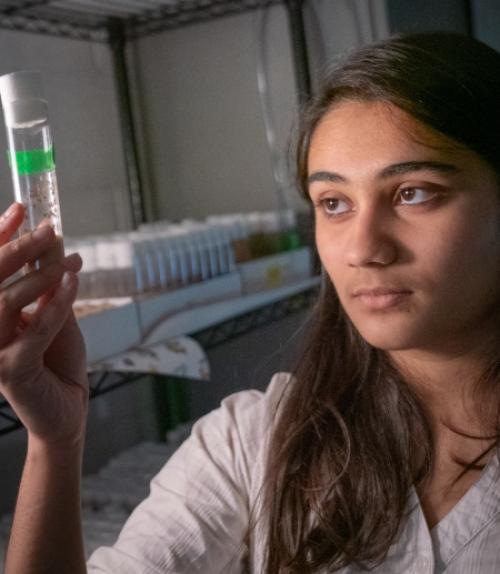
Physics, fundamental to neurobiology
Because Itai Cohen’s lab studies matter in motion—colloidal particles, fly neurons, movement of individuals at a concert—Darshna Anigol was thrilled.
 Department Homepage
The College of Arts & Sciences
Department Homepage
The College of Arts & Sciences
Because Itai Cohen’s lab studies matter in motion—colloidal particles, fly neurons, movement of individuals at a concert—Darshna Anigol was thrilled.

Twenty-six Cornell graduate students have won more than $42,000 in fall 2018 Research Travel Grants, which provide students up to $2,000 to conduct thesis or dissertation research away from campus. In a typical year, 70 to 80 students receive these competitive grants from the Graduate School. More grant winners will be announced in the spring.
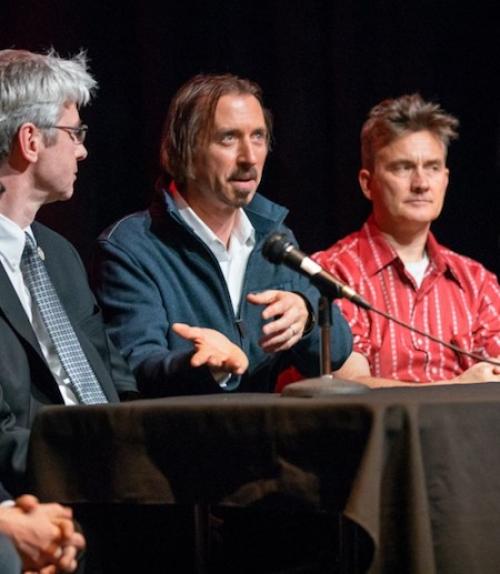
Two minutes into Jason Schmitt’s documentary “Paywall: The Business of Scholarship,” a pop-up window flashed across the screen, demanding payment. At the free Nov. 29 screening at Cornell Cinema, the gag coaxed uneasy laughs from students, professors and scholars all too familiar with running into paywalls during their research. The screening was followed by a discussion.
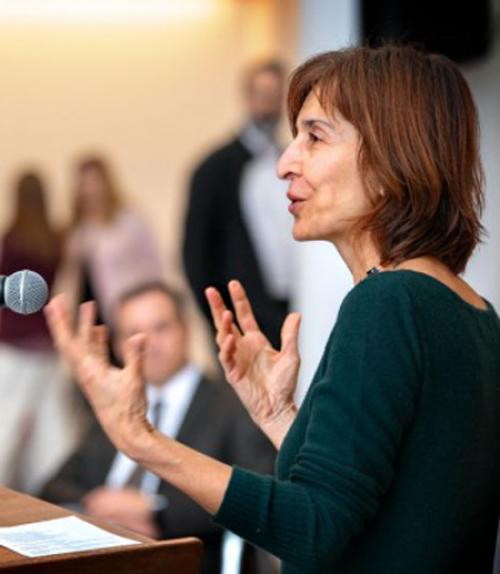
It’s not official unless there’s cake.On the cusp of arXiv’s move to Computing and Information Science (CIS) in January, members of Cornell University Library and CIS celebrated 17 years of the scientific research repository’s growth under library stewardship, and wished it continued success.
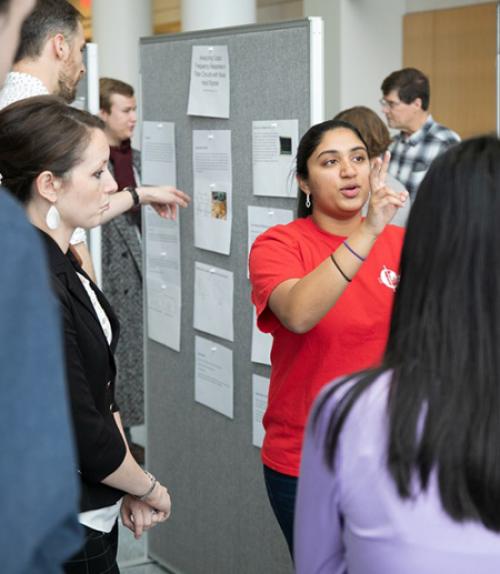
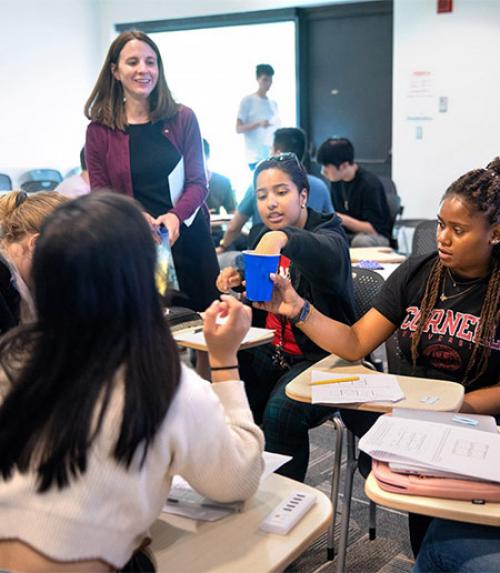
Students said they gained confidence and discovered the pleasure of experimentation.
This is an episode from the “What Makes Us Human?” podcast's fifth season, "What Do We Know about Inequality?" from Cornell University’s College of Arts & Sciences, showcasing the newest thinking from across the disciplines about inequality. Featuring audio essays written and recorded by Cornell faculty, the series releases a new episode each Thursday through the fall semester.
New research at Cornell is helping address current challenges and develop more efficient accelerators.
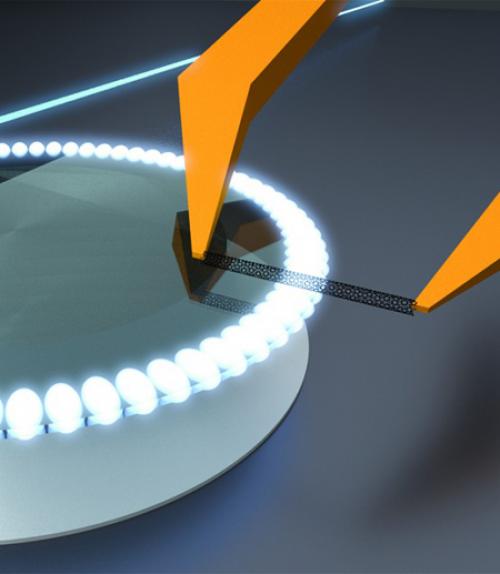
Researchers have devised a way to listen to a nanoscale guitar for the first time.
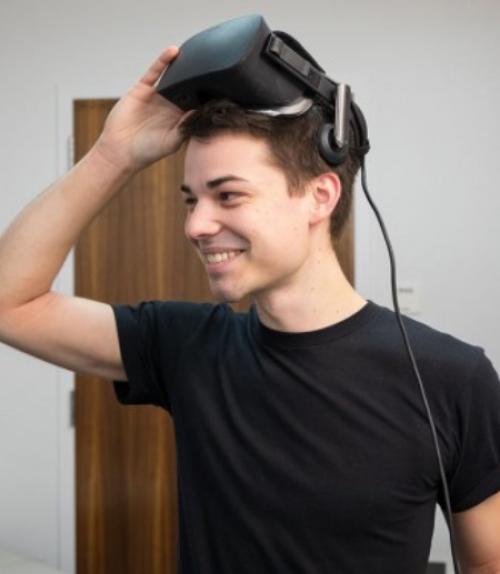
The simulation, “Learning Moon Phases in Virtual Reality,” is part of a multi-phase research study to determine whether the compelling, immersive nature of virtual reality (VR) provides a better learning outcome than conventional hands-on activities. The study – which found no significant difference among hands-on, computer simulation or VR learning – is one of the first to look at the impacts of VR on learning.
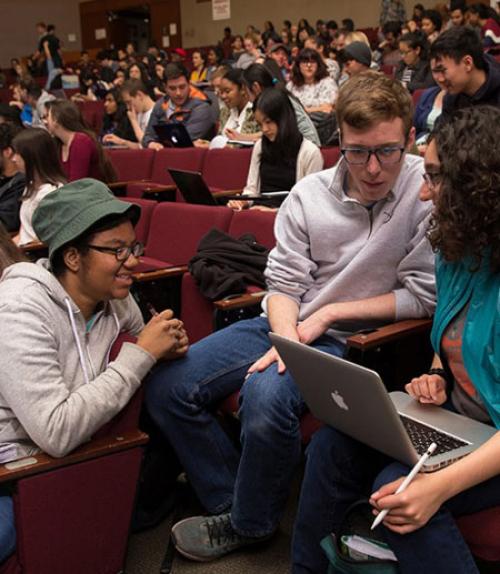
In all, 70 faculty members will work on substantially changing the way they teach in more than 40 courses to over 4,500 students.
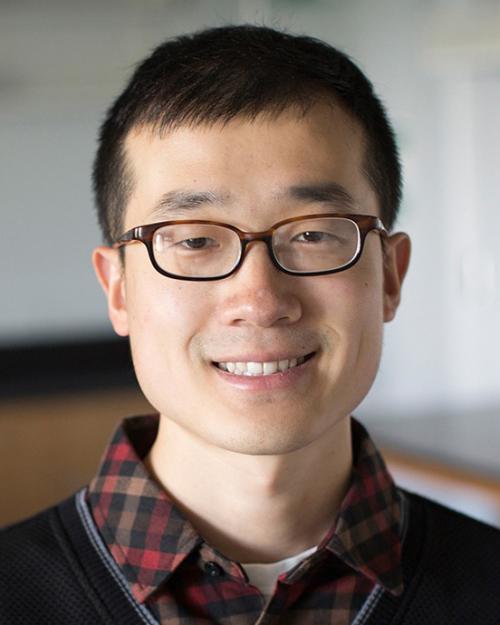
Assistant professors Jeremy Baskin, Song Lin and Brad Ramshaw have been named recipients of Alfred P. Sloan Foundation fellowships, which support early-career faculty members’ original research and broad-based education related to science, technology and economic performance.
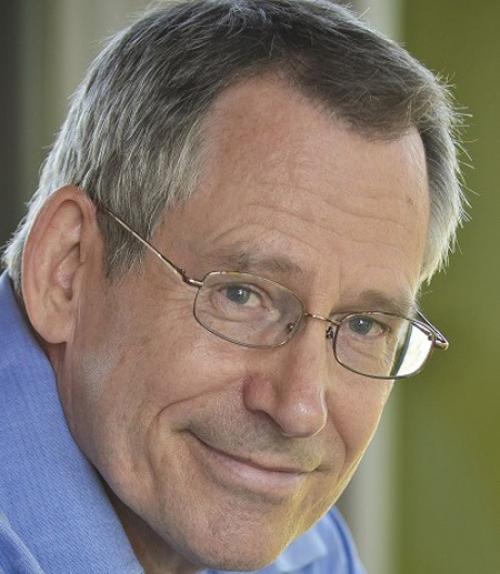
The quantum laws governing atoms and other tiny objects seem to defy common sense, and information encoded in quantum systems has weird, baffling properties like “quantum entanglement.”Physicist John Preskill will explain quantum entanglement, and why it makes quantum information fundamentally different from information in the macroscopic world, in the spring Hans Bethe Lecture, April 10 at 7:30 p.m. in Schwartz Auditorium, Rockefeller Hall.
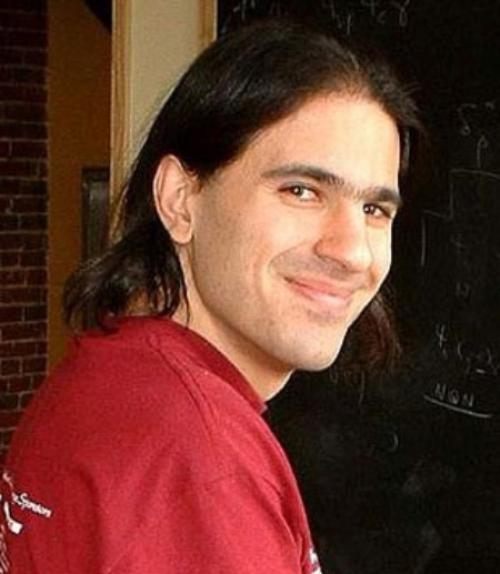
Why should resources – financial or intellectual – be dedicated to the pursuit of theoretical knowledge when the world has so many pressing problems? On April 24 particle physicist Nima Arkani-Hamed will examine the significance of performing basic research in his latest public talk as an A.D. White Professor-at-Large. The talk will be held at 7:30 p.m. in Rockefeller Hall’s Schwartz Auditorium and is free and open to the public. A reception will follow at 9 p.m. at the West Pavilion of Clark Hall.
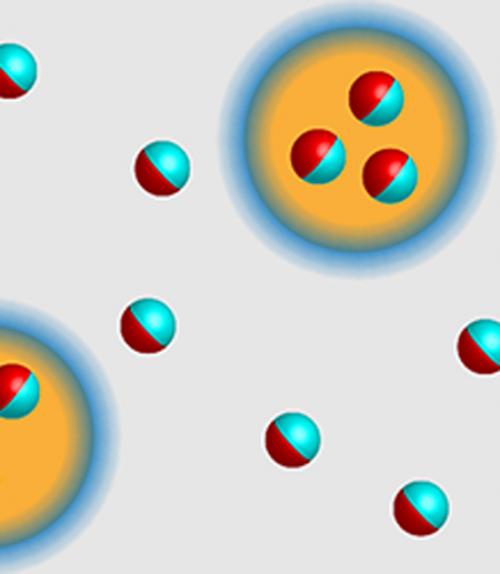
A Cornell professor collaborated with researchers at Royal Holloway, University of London, where experiments were conducted using special confinement chambers constructed at Cornell.
As humans, we have an insatiable desire to understand the cosmos and our place in it. How did the universe begin and how did it evolve? What is the nature of dark matter and dark energy? How will it all end? “These are the most fundamental questions one can ask,” says Steve Kang Hoon Choi, Cornell Presidential Postdoctoral Fellow. “If we believe greater knowledge betters our lives, then this is what drives us to study the cosmos.”
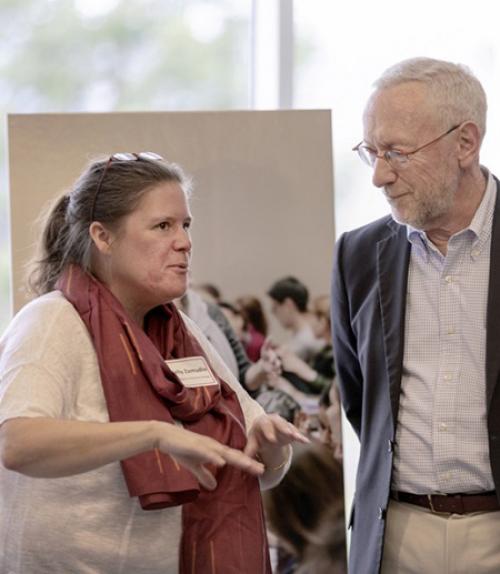
The Provost’s Seminar on Teaching and Learning brought nearly 75 faculty and instructors together to share and celebrate innovations in teaching at Cornell.
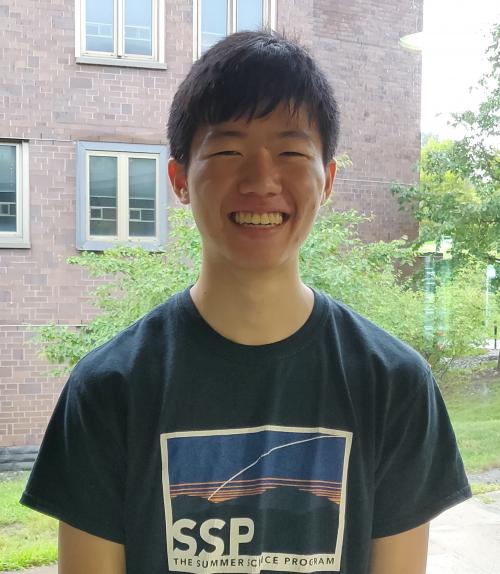
The scholarship supports students pursuing graduate study and careers in the fields of mathematics, the natural sciences and engineering.
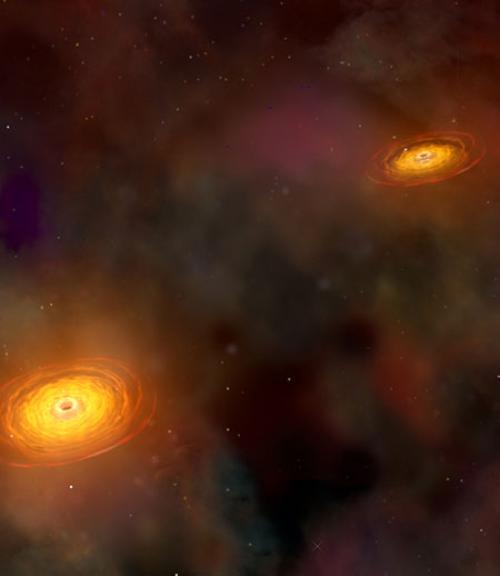
Each new observable provides different ways of confirming the theory of general relativity and offers insight into the intrinsic properties of gravitational waves.
Yunqui (Kelly) Luo has long been intrigued by the laws of nature.“As a kid, I loved to play with tools and understand the ways in which the physical world works around us,” she said. The physics labs at Hong Kong University of Science and Technology cemented her passion for research.
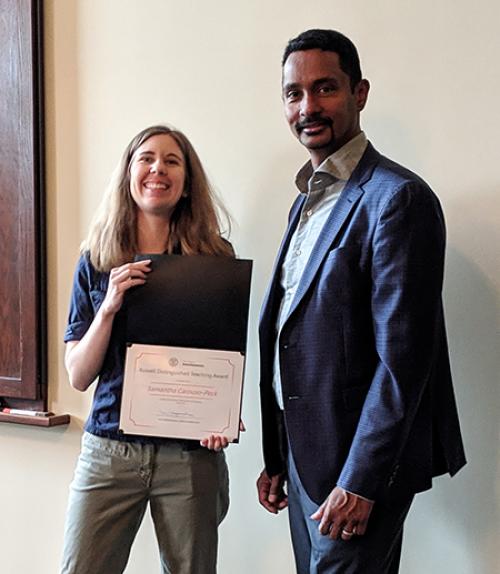
The awards recognize innovative teaching, student counseling, classroom presence, preparation, administration and the development of new courses.
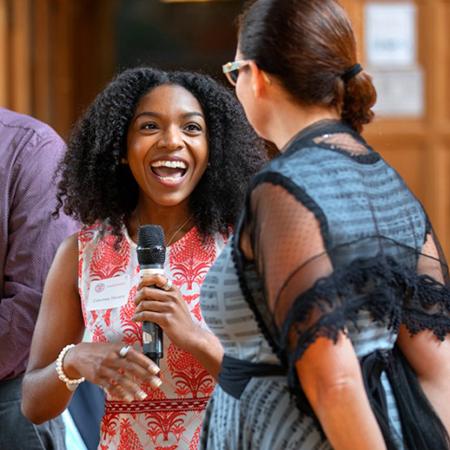
The arc of educational continuity and inspirational teaching was celebrated May 22 at the 31st annual Merrill Presidential Scholars convocation in Willard Straight Hall. Thirty-four seniors – among the very best of the Class of 2019 – honored beloved, guiding-light high school teachers and inspirational Cornell faculty members.
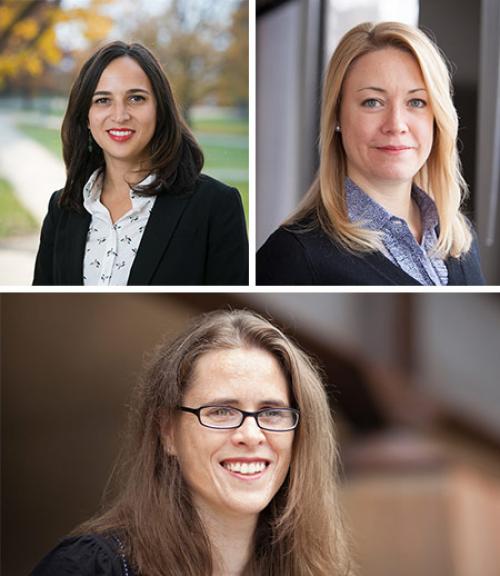
Erin York Cornwell has been awarded the 2019 Robert and Helen Appel Fellowship for Humanists and Social Scientists, and Ananda Cohen-Aponte and Khena Swallow have been awarded the 2019 Robert A. and Donna B. Paul Academic Advising Award. They were among the Arts & Sciences faculty honored at a May 25 trustee-faculty dinner recognizing university-wide teaching and advising.
Nearly 30 faculty members gathered recently to share what they’ve learned about teaching in Canvas, Cornell’s new learning management system.Many of the reasons Cornell chose to switch from Blackboard to Canvas – its streamlined interface, student-centered design and ease of integrating outside tools – were highlighted in faculty presentations as well as a student panel, held May 15 in the Biotechnology Building.