
First cohort of A&S Nexus Scholars chosen for summer research positions
Fifty undergrads in the College of Arts & Sciences will take part in paid research projects in Ithaca this summer with faculty from throughout the College.

Three students in STEM win 2022 Goldwater Scholarships
A sophomore and a two juniors have won Goldwater Scholarships, the top undergraduate award for students pursuing careers in mathematics, the natural sciences and engineering. Jeffrey Backus, ’23 and Abhi Sarma ’24, both in the College of Arts and Sciences,
Tomás Arias
James Gilbert White Distinguished Professor in the Physical Sciences and Stephen H. Weiss Presidential Fellow
Director of Undergraduate Studies
Physics
Four elected to National Academy of Sciences
Peter Lepage, the Tisch Family Distinguished University Professor in the Department of Physics, is among four Cornell faculty to be honored this year.
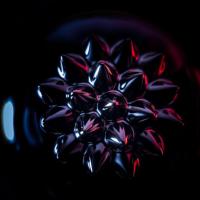
Mechanism ‘splits’ electron spins in magnetic material
Cornell researchers have discovered a technique that could eventually lead to the development of more energy-efficient magnetic memory devices.
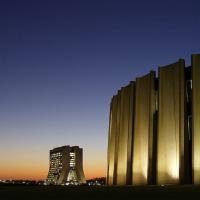
Graduate student selected for DOE program
Zepyoor Khechadoorian’s project in high energy physics will be the measurement of the muon anomalous magnetic moment, working with Fermilab advisor Chris Polly.
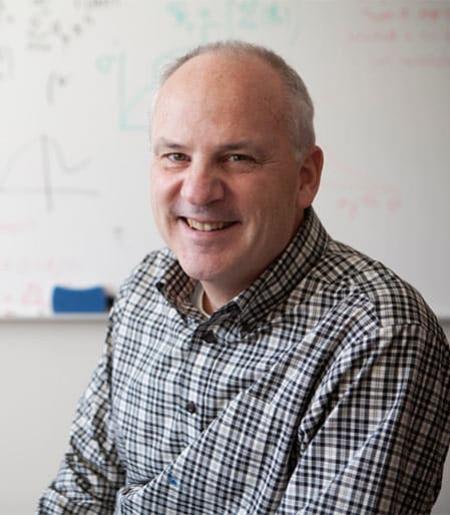
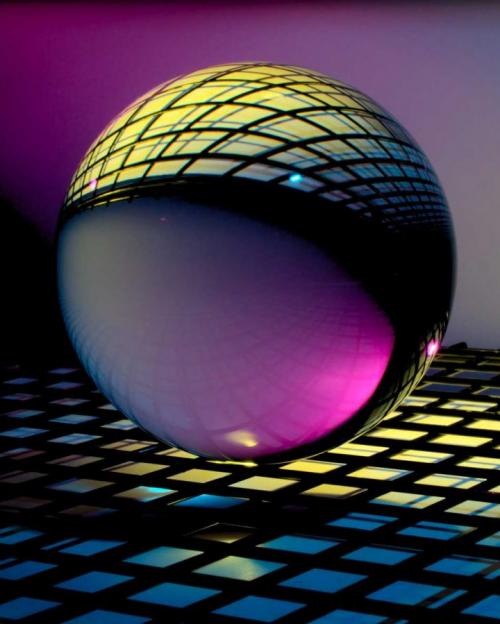
Machine learning tool sorts the nuances of quantum data
An interdisciplinary team of Cornell and Harvard University researchers developed a machine learning tool to parse quantum matter and make crucial distinctions in the data, an approach that will help scientists unravel the most confounding phenomena in the subatomic realm.
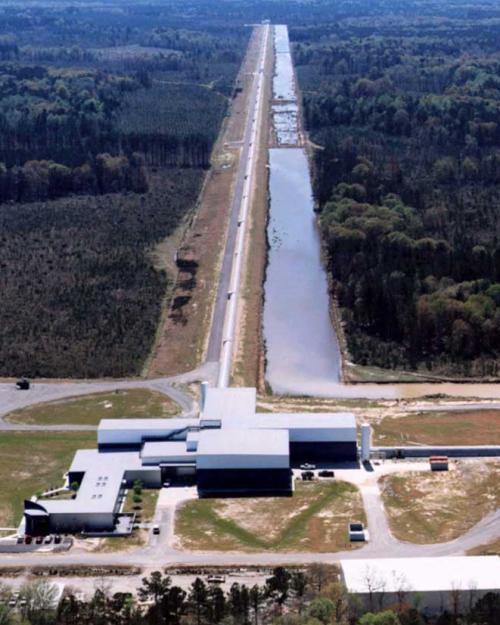
Hawking’s black hole theorem observationally confirmed
Saul Teukolsky and other physicists at Cornell, MIT and elsewhere have confirmed Hawking's area theorem for the first time, using observations of gravitational waves.
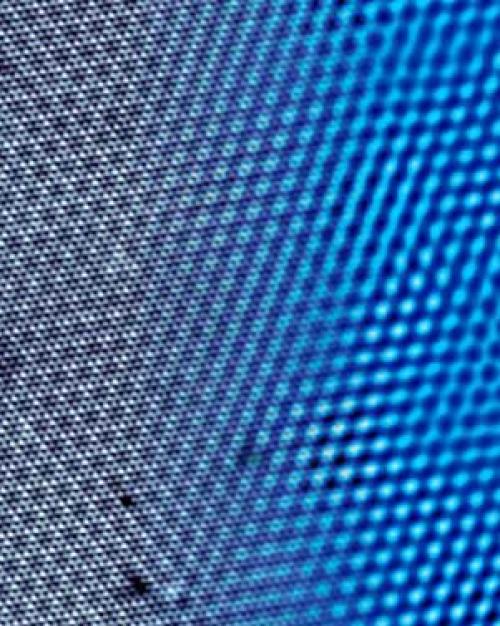
Electron-pair discovery advances field of quantum materials
Physicist Séamus Davis and his team have found an exotic state of quantum matter.
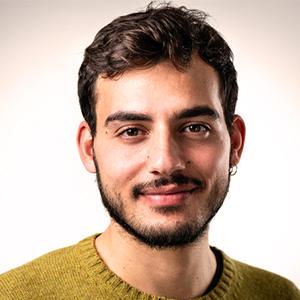
Klarman postdoc tackles ‘theory of everything’ with first principles
Physicist Francesco Sgarlata is taking a bottom-up approach to finding a theory of quantum gravity.
New Frontier Grants push boundaries in A&S research
The College has awarded seven New Frontier Grants totaling $1.25 million to faculty members pursuing critical developments in areas across sciences and humanities.
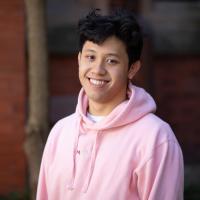
'I realized the importance of learning for the sake of learning'
Anthony Nguyen is a physics and math major.
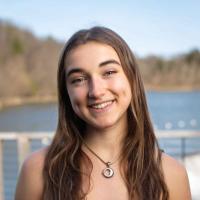
'Hard choices are what make life meaningful'
Willow Martin is a physics major.
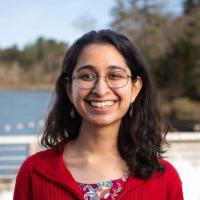
'The interesting connections between my classes were exhilarating to discover'
Gauri Batra is a physics major.
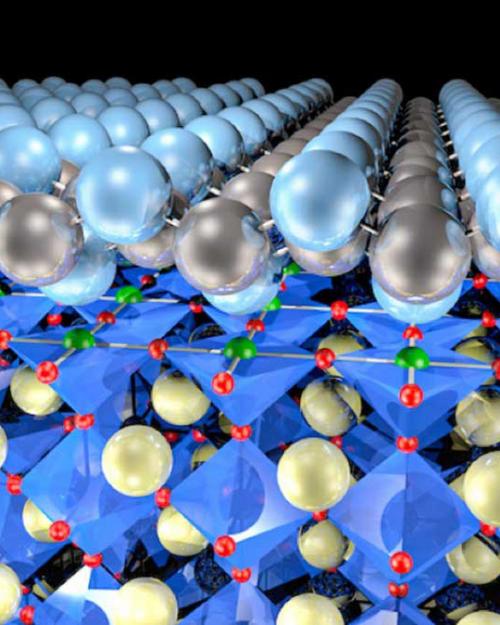
Monolayer superconductor exhibits unusual behavior
Cornell researchers have discovered a rare “pseudogap” phenomenon that helps explain how the superconducting transition temperature can be greatly boosted in a single monolayer of iron selenide, and how it might be applied to other superconducting materials.
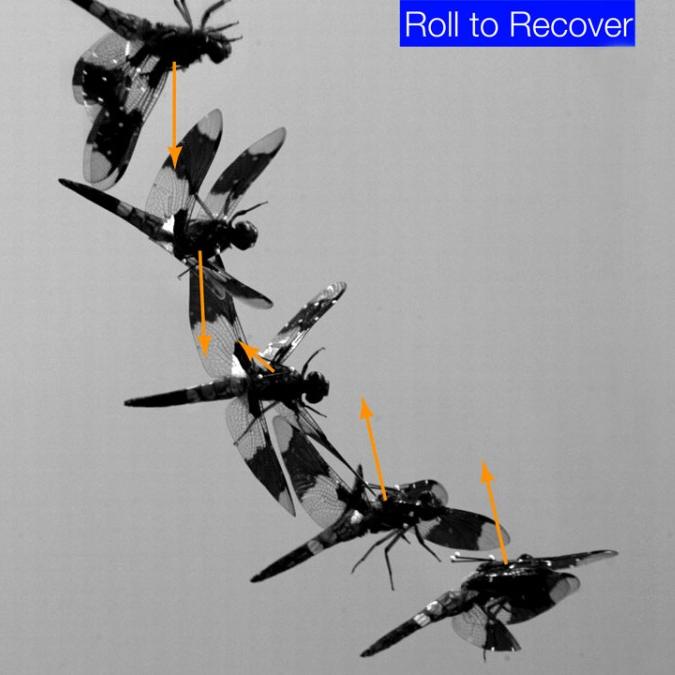
Dragonflies use vision, subtle wing control to straighten up and fly right
As one of the oldest insect species on the planet, dragonflies are an early innovator of aerial flight.
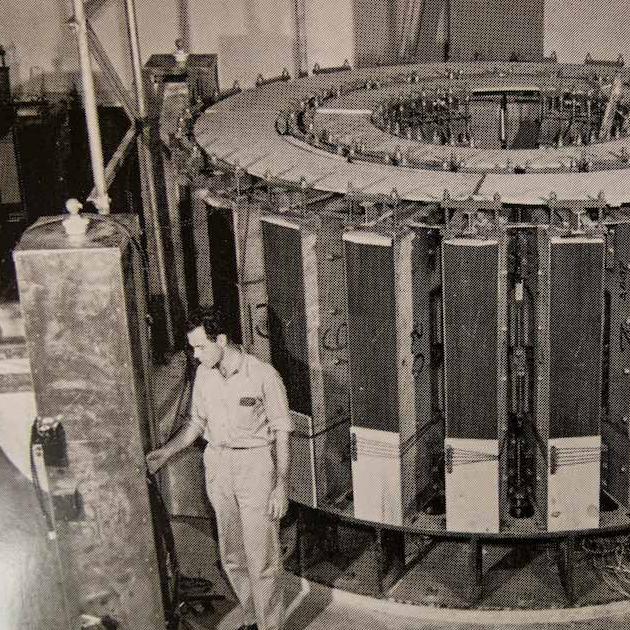
CHESS celebrates 75 years of synchrotron light
Sixty feet below the Cornell University campus, at the Cornell High Energy Synchrotron Source (CHESS), researchers utilize X-rays that are 100 million times more intense than Röntgen's first beams of light.
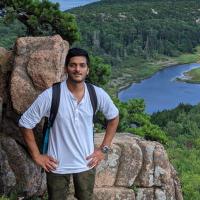
Student Spotlight: Vaibhav Sharma
Vaibhav Sharma, doctoral candidate in physics from Delhi, India, studies the quantum mechanical behavior of ultracold atoms.
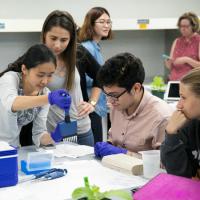
Best practice for instructional labs
Physicist Natasha Holmes and her co-author describe how undergraduate labs that encourage investigation and decision-making are more positive for students – and are more effective -- than those that focus on verification of concepts in textbooks.